
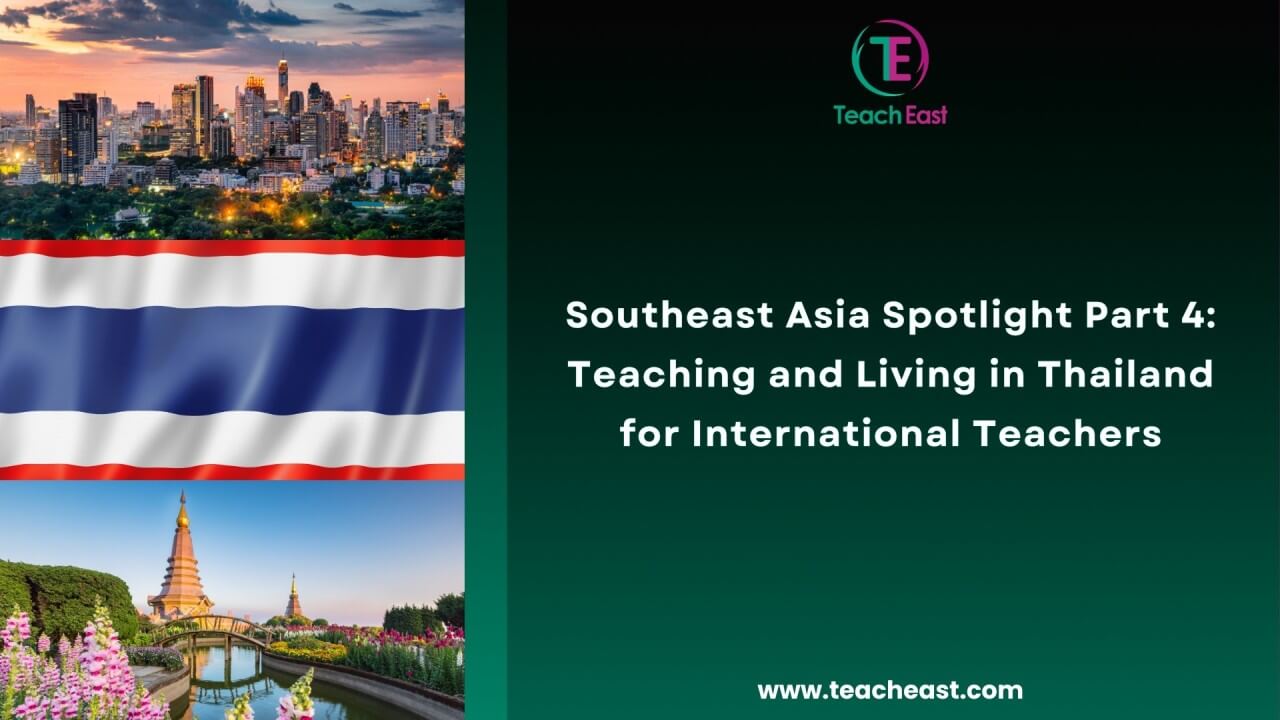
Thailand is often introduced to teachers through lifestyle imagery, cultural reputation, and personal stories rather than policy frameworks or institutional structures. Rather than conversations beginning with visa thresholds, salary benchmarks, or eligibility requirements, Thailand tends to enter the picture through how it feels as a place to live.
Commonly referred to as the Land of Smiles, Thailand is widely recognised for its warmth, politeness, and welcoming social culture. For many international teachers, this reputation is not a superficial detail. Teaching abroad is not only a professional decision, but a personal one, and the social environment of a country plays a meaningful role in long-term satisfaction.
This article explores Thailand from two connected perspectives: what daily life is like, and how the education system and international school market function in practice. It aims to support teachers in forming a realistic, well-rounded understanding of Thailand as part of an international career in Southeast Asia.
Living in Thailand: social ease and quality of life
Thailand has a long history as a regional and global hub, and today it is home to residents from more than 180 nationalities. This diversity is visible in daily life and has shaped how systems, services, and communities operate. Foreign residents are a familiar part of the social landscape, and many aspects of life are designed with an international population in mind.
In practical terms, this is reflected in access to housing, healthcare, transport, and everyday services, particularly in areas with established international communities. Cities such as Bangkok, Chiang Mai, and Phuket offer a wide range of accommodation options, international-standard medical facilities, and active expatriate networks. For many teachers, this supports a smoother transition into daily routines.
Communication plays an important role in quality of life. While Thai is the national language, English is widely used in professional, educational, and service settings, particularly in urban areas. In international schools, English is the working language across teaching, administration, and parent communication. Outside of school, many teachers find that routine interactions can be handled comfortably in English, especially in locations with a strong international presence.
Social interaction in Thailand is often characterised by politeness, respect, and a calm approach to communication. These cultural values influence everyday exchanges and contribute to an atmosphere that many teachers experience as welcoming and socially comfortable. Over time, this can positively shape how quickly teachers settle and develop a sense of belonging.
Quality of life in Thailand is also shaped by choice. Some teachers are drawn to larger urban environments with extensive services and connectivity, while others prefer locations that offer a slower pace and a stronger sense of community. This range of options allows teachers to shape a lifestyle that aligns closely with their personal and professional priorities.
The international school landscape in Thailand
The scale of the sector means that international education in Thailand is well established rather than niche. Schools serve expatriate families, internationally minded Thai families, and mixed student populations. As a result, institutions vary widely in structure, governance, and focus, offering teachers a broad range of professional environments.
Curricula offered across Thailand’s international schools include British pathways, Cambridge programmes, American curricula, and the International Baccalaureate, alongside hybrid and international-plus models. British and Cambridge-based frameworks are particularly common, while IB programmes are well established in a number of long-standing schools. American curriculum schools also form a stable part of the market, particularly in Bangkok.
This diversity of curricula supports ongoing demand for teachers from a range of professional backgrounds. Schools recruit across Early Years, Primary, and Secondary phases, as well as for specialist subjects. Demand is sustained by consistent enrolment, school expansion, and natural staff movement across the sector.
Rather than operating as a single, uniform market, Thailand’s international school landscape is layered. Some schools are long established with structured systems and clear expectations, while others are newer or growing and may offer more dynamic environments. For teachers, understanding where a school sits within this landscape is an important part of evaluating suitability and long-term fit.
Overall, Thailand’s international school sector offers scale, variety, and continuity. For many teachers, this translates into multiple entry points, opportunities for progression, and the ability to build sustained international experience within one country.
Teaching environment and professional culture
Across many schools, classroom environments reflect wider social norms of politeness and respect. Students are generally expected to interact with teachers in a courteous manner, and many international teachers describe classrooms as calm and cooperative, particularly where clear routines and expectations are in place. While engagement levels and academic rigour vary by school and age group, this underlying tone often supports positive teacher–student relationships.
Respect for teachers is culturally embedded and extends beyond the classroom into the wider school community. As a result, teachers are often expected to carry themselves professionally both inside and outside school settings. This can include being mindful of public behaviour and, in some cases, online presence on social media. These expectations are not typically restrictive, but they do reflect the value placed on professionalism and role modelling within Thai society.
Professional culture varies across the international school sector. Some schools are long established with structured systems and clearly defined expectations, while others are newer or expanding and may offer more dynamic environments. Teachers who are organised, culturally aware, and comfortable adapting to different professional contexts tend to integrate well.
Parent engagement is common, particularly in schools serving internationally minded local families. Clear communication, consistency, and transparency are valued, and teachers who establish strong routines often build trust over time.
Overall, the teaching environment in Thailand is often described as relational and respectful, with an emphasis on professionalism, collaboration, and positive day-to-day interactions. For many international teachers, this creates a professional experience that feels balanced and sustainable.
Work-life balance and lifestyle
The academic calendar typically allows for meaningful time away from the classroom across the year. Teachers can expect the standard summer holiday, alongside an extended break in October, which in many schools lasts close to a full month and reflects the local academic rhythm. In addition to school holidays, Thailand officially observes approximately 16 to 19 public paid holidays each year, including national, royal, and religious observances. While international schools follow their own calendars depending on curriculum, many recognise a significant proportion of these public holidays, creating regular breaks throughout the year.
From a financial perspective, salaries in international schools vary according to school tier, curriculum, subject specialism, and experience. For classroom teachers, monthly salaries commonly fall in the range of approximately USD 2,200 to USD 4,700, with higher figures available in well-established schools or for teachers with strong international experience or additional responsibilities. Packages typically include medical insurance and may also offer housing support, annual flights, or tuition benefits, depending on the school.
Cost of living is an important part of how teachers experience life in Thailand. While expenses vary by location and lifestyle choices, many teachers find that housing, food, transport, and everyday services are accessible and allow for a comfortable standard of living. This balance often enables teachers to enjoy life outside work, pursue personal interests, and maintain wellbeing without constant financial pressure.
Thailand’s position as a regional travel hub further supports this lifestyle. Domestic travel is widely accessible, making it easy to explore different parts of the country during weekends and school breaks. Internationally, Thailand offers strong connectivity across Southeast Asia and beyond, allowing teachers to make practical use of their holidays and maintain a sense of mobility throughout the year.
Taken together, the combination of generous time off, competitive international school packages, manageable living costs, and strong regional connectivity contributes to a lifestyle that many international teachers find both enjoyable and sustainable over the longer term.
What to consider before moving to Thailand
Preparation plays an important role in how smoothly teachers move through the recruitment process. Schools typically expect clear documentation, including academic qualifications, recognised teaching credentials, and a consistent employment history. Familiarity with international curricula, particularly British, American, Cambridge, or IB frameworks, can strengthen alignment with school expectations. While Thailand is often viewed as an accessible destination, the recruitment and onboarding process itself can be detailed and structured. Schools usually assign a dedicated staff member to guide teachers through each stage, from documentation to arrival, helping ensure requirements are met correctly. Teachers who approach the process with clarity around their professional profile and priorities tend to experience stronger outcomes and smoother transitions. A practical tip frequently shared by teachers is to arrive with extra passport-sized photographs, as these are commonly required at multiple stages of the process and having them ready can save time once on the ground.
Thailand also tends to suit teachers who are comfortable working within culturally respectful and relationship-oriented environments. Professional expectations extend beyond the classroom, and teachers are generally expected to carry themselves with a level of professionalism that reflects their role within the wider school community. This includes cultural awareness, adaptability, and thoughtful engagement with students, parents, and colleagues. For many teachers, these expectations feel supportive rather than restrictive when they are understood in advance.
Finally, evaluating school context carefully is essential. Thailand’s international school sector is diverse, and experiences can vary significantly depending on school structure, leadership, and community. Taking time to understand a school’s culture, package structure, and long-term expectations allows teachers to make informed decisions rather than relying on surface impressions. Teachers who align their move with both professional goals and lifestyle priorities are often best placed to build a rewarding and sustainable experience in Thailand.
Final reflections
Thailand continues to attract international teachers for reasons that go beyond any single factor. Its appeal lies in the combination of a socially welcoming environment, a well-established international school sector, and a lifestyle that allows for balance alongside professional growth.
For teachers, Thailand offers choice. There is diversity in school settings, curricula, and locations, alongside flexibility in how daily life is shaped outside the classroom. Respectful professional culture, generous time off, and strong regional connectivity all contribute to an experience that many educators find both rewarding and sustainable.
At Teach East, we support teachers across Thailand and the wider Southeast Asia region with guidance, preparation, and long-term career planning. Teachers considering opportunities for the 2026–2027 academic years are encouraged to register at www.teacheast.com and subscribe to our LinkedIn newsletter to stay informed as new roles are released.
The Southeast Asia Spotlight series will continue with further destinations across the region, offering practical insight to support confident, well-informed decisions at every stage of an international teaching career.

0 Comments