
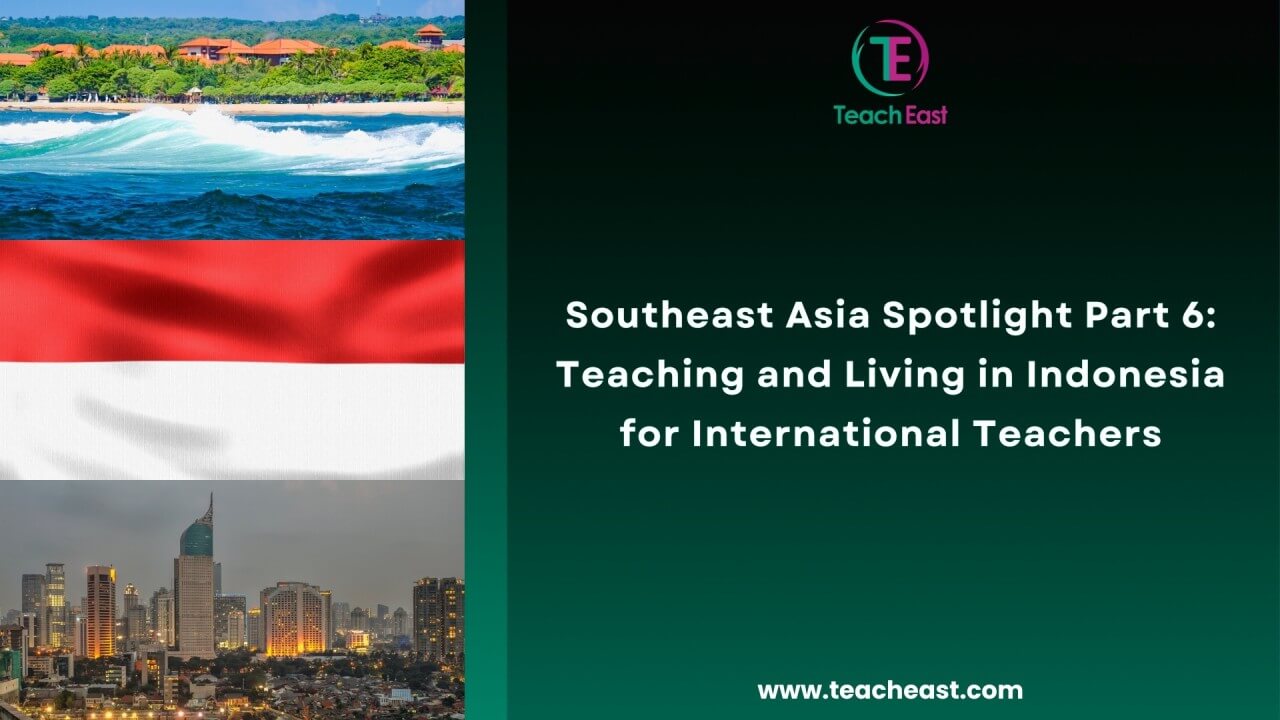
For teachers considering Indonesia in 2026, the experience is shaped by preparation. From recruitment processes to legal employment and daily life, the country offers an environment where expectations are clearly set and professional standards are taken seriously. Understanding this landscape is essential for teachers seeking clarity, stability, and continuity in their international careers.
Legal employment and professional clarity
This system reflects Indonesia’s emphasis on regulated employment and institutional accountability. The process involves advance planning and the submission of standard professional documentation, including academic qualifications, teaching licences, employment references and background checks. While this requires organisation and lead time, it provides teachers with legal certainty and a clear professional status from the outset. Schools are accustomed to guiding international staff through each stage of the process, and communication around timelines and requirements is typically well established.
For teachers, this structure offers reassurance. Employment terms are formalised, responsibilities are clearly outlined, and the relationship between teacher and employer is defined within a recognised legal framework.
Qualifications and expectations within international schools
These expectations reflect the nature of the international school community in Indonesia. Schools serve a diverse mix of families, including expatriates and internationally minded local households, and they operate within systems that prioritise academic continuity and safeguarding. Teachers are therefore expected to arrive with both subject expertise and the confidence to work within culturally diverse learning environments.
International schools in Indonesia employ teachers from a wide range of national backgrounds, reflecting the globally oriented nature of their school communities. Schools focus on qualifications, teaching practice, and communication skills, and recruitment decisions are made with professional capability as the primary criterion.
The structure of international education in Indonesia
Under the SPK structure, schools operate with defined governance arrangements that align Indonesian regulatory requirements with international curriculum standards. This affects how schools are licensed, how staffing is approved, and how academic oversight is maintained, ensuring that international programmes are delivered within a clearly established institutional framework.
Over time, this model has supported the development of a stable and coherent international school sector. Many schools have operated under the same framework for years, resulting in consistent organisational practices and clearly articulated academic identities. For teachers, this translates into working environments where policies, procedures, and expectations are structured and consistently applied.
Where international teachers live and work
Life in Jakarta is shaped by location and routine. Teachers who align housing choices with their school location often find that daily life becomes more manageable and balanced over time. The city offers extensive infrastructure, healthcare services, and international communities, which contribute to a well-supported professional environment.
Bali offers a different setting while maintaining the same professional expectations. Its international schools are fewer in number and operate within close-knit communities. Appointments in Bali are typically made with a long-term view, and schools seek teachers who are aligned with both the academic and community aspects of school life.
Beyond Jakarta and Bali, international and bilingual schools operate in cities such as Surabaya, Bandung, Yogyakarta, and Medan. These locations appeal to teachers who value a steady pace of life and the opportunity to build longer-term connections within their local communities, while still working within a structured international school environment.
Salaries, benefits, and professional packages
Many established international schools offer comprehensive packages that include a monthly salary alongside housing support, medical insurance, annual flights, and professional development opportunities. Other schools may provide local salary structures with selected benefits, depending on their operating model.
For teachers, evaluating an offer involves understanding the full scope of the package rather than focusing solely on salary figures. Housing arrangements, insurance coverage, and daily living costs all contribute to the overall experience. Teachers who take a considered approach to these factors often find that Indonesia supports a comfortable and sustainable professional lifestyle.
Living in Indonesia as an international teacher
Lifestyle in Indonesia varies widely by location, but is generally defined by convenience and affordability. Everyday costs such as food, transport, and services remain accessible by international standards, allowing teachers to maintain a comfortable routine while exploring their surroundings. Local markets, cafés, and neighbourhood businesses sit alongside modern shopping centres and international amenities, creating a balance between familiarity and local character.
Indonesia’s cultural and geographic diversity is one of its defining features. From major urban centres to coastal regions and inland cities, each area offers a distinct pace of life and visual landscape. Teachers based in Jakarta experience a large, outward-facing city with extensive infrastructure and international services, while those living in other regions often enjoy quieter settings with closer proximity to natural environments.
The country also functions as a regional travel hub. Well-connected airports and frequent domestic and international flights make it easy for teachers to travel within Indonesia and across Southeast Asia during school holidays. This accessibility allows educators to combine professional commitments with exploration, whether within the country’s many islands or beyond its borders.
Healthcare access for international teachers is typically provided through private medical insurance arranged by employers. Major cities are home to well-equipped private hospitals and clinics that are accustomed to supporting international residents, and schools generally offer guidance on healthcare systems as part of the induction process.
Overall, living in Indonesia provides international teachers with a practical and well-supported lifestyle, enriched by cultural depth and geographic variety. For many, daily life is defined not by adjustment, but by the ease with which professional routines and broader experiences can sit alongside one another.
A considered destination for international educators
Indonesia’s international education sector reflects many of the qualities that define teaching across Southeast Asia today: structured systems, established institutions, and a professional environment shaped by long-term development. For international teachers, navigating this landscape requires preparation, clarity, and access to the right opportunities at the right time.
This is where working with a specialist recruitment partner can make a meaningful difference. At Teach East, we support teachers exploring international opportunities across Southeast Asia. Registration with us is completely free for teachers, and registering once allows candidates to be considered for a range of suitable vacancies without the need to submit multiple applications.
We work with hundreds of schools across the region and have recently launched our Southeast Asia office, strengthening our understanding of local school systems and recruitment cycles. Applying through a recruitment agency differs from applying directly to individual schools, as it helps ensure that a teacher’s profile is reviewed by experienced recruiters and shared with schools that align closely with their background and preferences.
Teachers interested in opportunities in Indonesia or elsewhere in Southeast Asia are invited to register at www.teacheast.com and stay tuned for the next articles in our Southeast Asia series, where we continue to explore international teaching destinations across the region.

0 Comments